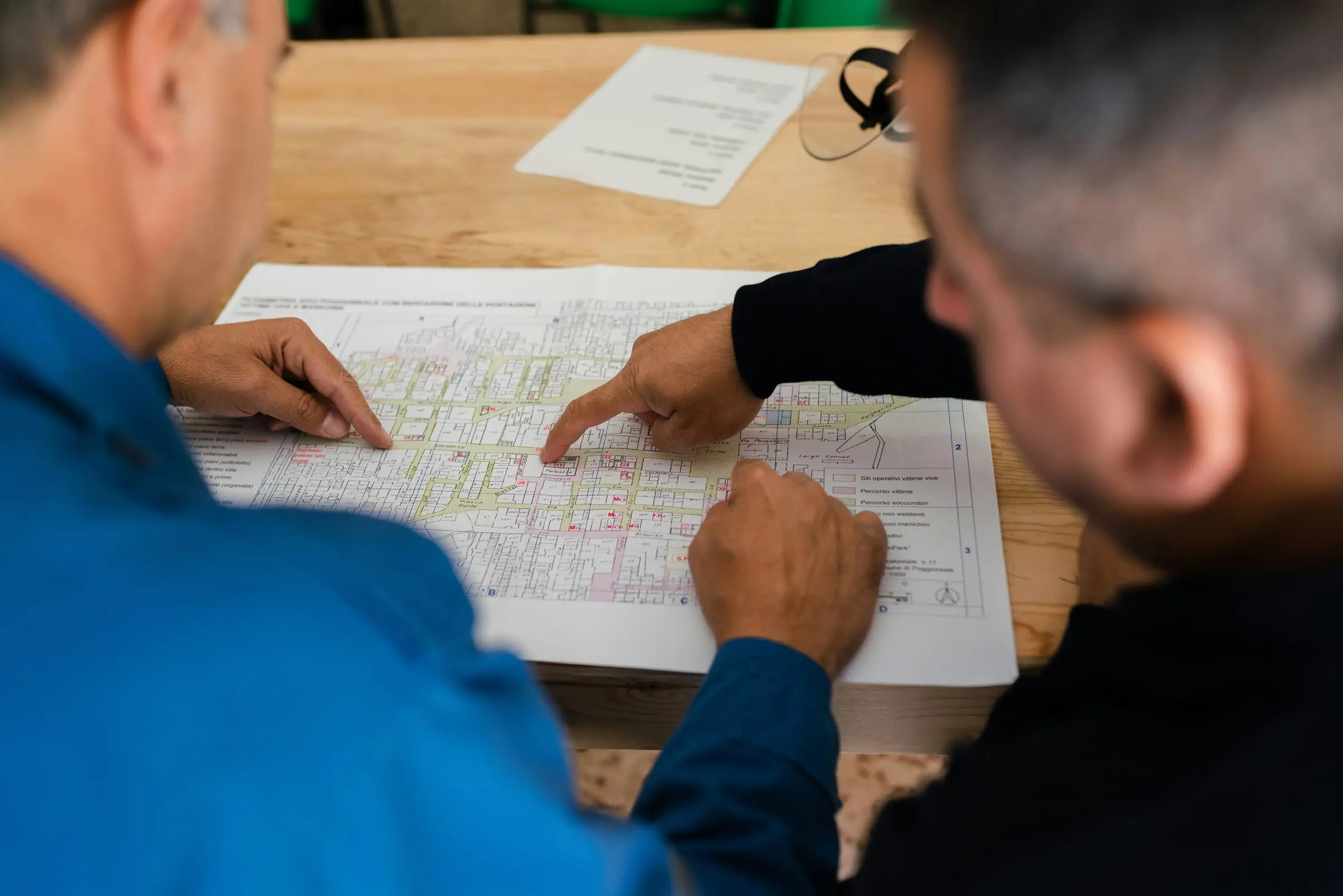
Organizational design
Organizational Design Projects Have an Image Problem
The sponsor wants a number. The leadership team wants a structure it can grow into. Employees want to be valued. The work has to deliver all three.
Put “consultants” and “organizational design” in the same sentence, and most people hear one word: layoffs.
That image likely won’t ever go away completely. Let’s face it, some of it is earned. And it’s getting worse: Gartner research found employees’ willingness to support company changes fell from 74% in 2016 to 43% in 2022.
Why reassess a structure that’s working?
Most CEOs I’ve worked with have told me some version of “If we were designing this organization from scratch, I wouldn’t build it the way it is now.” Most of the large restructurings I’ve been part of, outside M&A, were at companies that hadn’t reviewed their structure regularly.
To be clear, I usually don’t recommend a major restructuring. I start with the hypothesis that we can remodel the bathroom, or maybe knock down a couple of walls, instead of tearing the house down. What I do recommend is an intentional, recurring review of the organizational structure. That doesn’t always take outside help.
Hitting budget every quarter can hide organizational inefficiency, and often creates it. Faster decisions, real performance management and work that flows across departments all come from looking hard at the organization, and at the data, again and again.
Your competitors are looking at their structures. With globalization and AI, the pace of change is only picking up, and companies that stand still fall behind on revenue, price, margin or all three.
I start with the hypothesis that we can remodel the bathroom, or maybe knock down a couple of walls, instead of tearing the house down.
When the ask arrives as a number
Managing stakeholder expectations is harder on organizational design projects than on any other type of consulting project.
Much of my organizational design work involves private equity sponsors focused on value creation. Sponsors often bring me back to their next portfolio company, often with a financial objective, such as “Assess whether there’s $20 million of value in the management layers without changing service levels.”
Even when value creation is what success means to the sponsor, hitting a short-term number won’t satisfy me, or most stakeholders. Each organization needs the right data, fundamentals and performance management systems to grow. Early in my career, I had to learn how to bridge the gap between the sponsor’s number and what the company needs.
The organizational design project that changed my thinking
The client was a growing engineering services company with more than 7,000 people, nearly all of them billable. The sponsor gave us a $20 million labor cost target focused on management spans and layers. In our first meeting, the CFO told me he didn’t usually like consultants and cared more about long-term outcomes than the company’s private equity owners did.
We started with data analysis, benchmarking and stakeholder interviews to learn the organization and its operating model. Then we spent weeks in the org charts, ran surveys and held more interviews to validate manager opportunities by region and individual. We also identified departments to consolidate and right-shoring opportunities. That was what the sponsor wanted most, but it only scratched the surface of the client’s goals. My colleague Vivek Parepady discusses this project in his article “What Organizational Design Looks Like When It’s Done Right.”
The client wanted a framework to manage to as it grew. So we built it with its leaders: manager role definitions, span and layer targets by function and by layer, standardized job titles and levels, labor planning metrics for scaling with growth, new processes for evaluating requisitions and a new cadence for longer-term labor planning.
In the end we met the sponsor’s target, and the company got a structure it could scale on.
I still run the math on every project. Now it’s where I start.
How I approach organizational design today
Before a project starts, I ask the CEO or CFO for their top three objectives, in their own words, and how this project aligns with their short and long-term goals. If we find efficiencies, how will they capture them: a reduction in force, attrition or a hiring freeze at certain layers? That candor goes beyond the statement of work. It helps us deliver a good outcome and see the path to a great one.
Through data and initial interviews, we assess span of control, layering, location strategy, compensation, the mix of employees and contractors, and trends. We set goals for each of those metrics from external benchmarks, the client’s objectives and past experience. Three weeks into a 12-week engagement, we can calculate the gap between those targets and the current state, in headcount and dollars. Any consultant can do that math, and so can plenty of leadership teams, but it isn’t validated, and it isn’t a plan anyone can implement.
I don’t believe you can assess an organization without high-level process mapping. Three pillars have to be assessed together: organizational structure, process and performance management. That means looking at what benchmarks can’t see: how work gets done and where process inefficiency gets in the way of organizational efficiency. Department by department, working down from each leader through the lower layers, we map core processes, service levels, how capacity and demand are planned and how performance is managed. Often, we pair organizational design work with a full value stream map of the entire organization.
Take financial planning and analysis: A team with strong systems and clean data can support a manager with more direct reports. A team stitched together from four acquisitions, running four sets of systems without cross-training, needs a different kind of manager. No benchmark or data set can tell you that.
What comes out is an implementation roadmap aligned with key stakeholders, with a timeline: what we can do now, what requires a significant reorganization and what depends on other improvements, such as process automation.
If a team’s right span is 10 and it can’t get there until a process is fixed, the plan says so and says what to fix first.
The design only sticks if the change does
Whatever the final design looks like, it reaches the goal only with a plan people can follow and real organizational change management behind it. Gartner found (opens in a new tab) that just 32% of business leaders said their most recent change reached healthy adoption by employees.
That starts with what people hear. No magic word satisfies every employee, and candor from the top helps most. The CEO should tell the people involved why we’re there and what the company wants. In our own interviews and client conversations, we tell the same story leadership told. Bain found (opens in a new tab) that 88% of leaders expect a new structure to meet its goals, but only 36% of the employees working in it agree.
Any system should account for the human element that will ultimately determine the success of that system. Success relies on leadership’s understanding of and ability to align the change to employee’s personal values and motivations (opens in a new tab). A major restructuring has a higher likelihood of perceived negative outcomes to the individual employees, and no honest language can eliminate that. Recurring review allows employees to better understand how organizational changes impact them and builds trust. This is the main reason why I advocate so strongly for ongoing organizational assessment.
My colleague Vivek makes the case for deciding to eliminate roles once, where applicable, so nobody spends the next year wondering whether another round of layoffs is coming. A clearly defined roadmap, with named owners and transparent communication, is the only way to make a new structure stick.
It is critical to determine how the value of organizational effectiveness will be measured and communicated. The definition of that value must be so clear that anyone new to the organization concludes: “this is valuable.” If, at any point, a leader cannot determine or communicate the value, the behavior will start to fade and a major restructuring can eventually result. Designing a system in which this does not occur is difficult but the importance of doing so is higher than ever. As technological change accelerates, competitive advantage will disproportionally shift towards organizations that consistently focus on effective alignment of their humans.
I don’t expect the image problem to disappear. People will still hear “consultants” or “org design” and worry about their jobs, and I understand why. Satisfying every stakeholder isn’t possible, and it shouldn’t be the goal. What I can control is how the work treats them: a clear reason up front, a plan they can see and a structure with room to grow.
Start with one portfolio company. Prove it. Scale on your timeline.
Tell us which one is behind plan and what the model assumed. You’ll talk to someone who has done the work.
Talk to an advisor